
Cryotherapy for Hip Pain in Toronto
An honest guide to cold therapy for hip arthritis, outer-hip (bursitis) pain and hip flexor strain: what the research shows, how localized and whole body sessions differ, and how cryotherapy fits alongside exercise and medical care.
The Short Answer
Cryotherapy may ease hip pain for a short time by cooling the area and dulling pain signals, but research on the hip itself is limited and cold works best alongside exercise and medical care. At our North York studio, localized cryotherapy targets the hip in a quick session from a $35 intro; whole body trials are $40.
- Localized hip sessions
- $35 intro session
- Free consultation
- 5.0★ · 135+ Google reviews
Can cryotherapy help hip pain?
It can help some people feel better for a while, and that is worth being clear about up front. Cold reduces the speed of nerve signals and raises the point at which pressure starts to hurt: in one laboratory study, cooling the ankle slowed nerve conduction and raised pain threshold and pain tolerance (Algafly & George, 2007). That is the most likely reason a session takes the edge off a sore joint.
What cryotherapy does not do is repair cartilage, reverse arthritis or fix the load problem behind most tendon-related hip pain. The treatments with the strongest support for hip osteoarthritis and outer-hip pain are exercise, education and, where relevant, weight management, with cold as a possible add-on for comfort.
The short version
- Good fit: people with a diagnosed, stable hip problem who want a drug-free way to ease pain between exercise or physiotherapy sessions.
- Not a substitute: for a medical assessment of new, severe or unexplained hip pain.
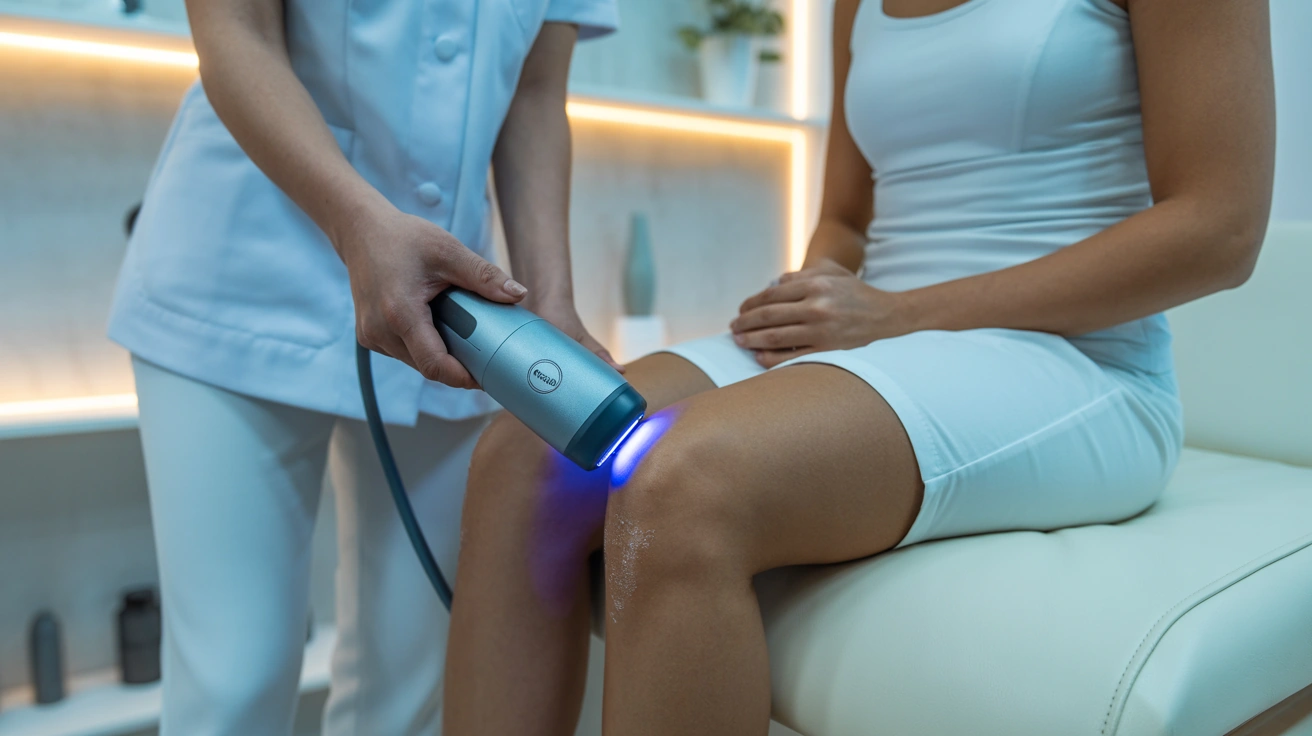
- Usual starting point: localized cryotherapy on the hip, because most hip pain sits in one area.
What usually causes hip pain, and where does cold fit?
“Hip pain” covers several different problems. Where the pain sits is a useful first clue, though only a clinician can tell you which one you have.
| Likely source | Where it is usually felt | First-line care | Where cold may fit |
|---|---|---|---|
| Hip osteoarthritis | Groin or front of the hip, with stiffness after rest | Exercise and, if overweight, weight loss (strong recommendations in the ACR guideline) | Thermal treatments, which include cold, carry a conditional recommendation |
| Outer-hip pain (greater trochanteric pain syndrome, often called hip bursitis or gluteal tendinopathy) | Side of the hip, often sore when lying on that side | Exercise and education | Possible short-term comfort; reviews point to exercise first |
| Hip flexor strain | Front of the hip after sprinting, kicking or a sudden stretch | Relative rest, then gradual loading | Cold for comfort in the first days, as with other soft-tissue strains |
| Pain referred from the lower back | Buttock, sometimes down the thigh | Assessment of the back | Depends on the cause; see cryotherapy for back pain |
| After hip replacement | Around the surgical site | Your surgeon’s rehab plan | Cold has been studied after surgery; studio sessions only with your surgeon’s clearance |
If you do not yet know why your hip hurts, start with your family doctor or a physiotherapist. A diagnosis changes what is worth trying, and our consultation is not a medical assessment.
What does the research say about cold therapy for the hip?
There is very little hip-specific cryotherapy research, so the honest picture is built from osteoarthritis studies that included hips, surgical studies and guideline reviews.
| Study | Who took part | What it found | Keep in mind |
|---|---|---|---|
| Kolasinski et al., 2020 (ACR/Arthritis Foundation guideline) | Guideline for hand, hip and knee osteoarthritis | Strong recommendations for exercise and weight loss in hip OA; conditional recommendation for thermal modalities | Cold is an add-on, not the main treatment |
| Hall et al., 2026 (Cochrane review) | 18 trials, 1,368 people with hip OA | Exercise probably reduces pain and improves function slightly versus no treatment | The authors judged these gains too small to make a meaningful clinical difference for most people; exercise is still the guideline mainstay |
| Dashina & Agasarov, 2020 | 150 people with knee or hip OA | Two weeks of ice, cold air or CO2 cryotherapy reduced pain more than anti-inflammatory drugs alone | Groups of 30; knee and hip results reported together |
| Chruściak, 2016 | 50 people with OA, 9 of them with hip OA | Most reported less pain and lower painkiller use after a 10-day course of whole body sessions | Questionnaire only, no control group |
| Xie et al., 2026 (meta-analysis) | 21 trials after knee or hip replacement, 285 hip patients | After hip replacement, cold reduced pain on days 1 and 2 | No effect on painkiller use or range of motion after hip surgery |
| Wang et al., 2025 and Bremer et al., 2025 | Reviews of outer-hip (trochanteric and gluteal tendon) pain | Exercise and education gave the clearest benefit | Neither review singles out cold therapy as a leading option |
A 2024 review of whole body cryotherapy in orthopaedics described promising but mixed results for osteoarthritis and called for more standardised research (Jeyaraman et al., 2024). Put simply: cold for the hip is reasonable for short-term comfort, and the evidence does not support bigger promises.
Localized or whole body cryotherapy for hip pain?
Both options use dry, supervised cold. The difference is how much of the body is cooled.
| Localized cryotherapy | Whole body cryotherapy | |
|---|---|---|
| What is cooled | One zone: the hip, with nearby related areas such as the outer thigh often included | The whole body, in an open-top nitrogen-vapour cryosauna with your head above the cabin |
| Temperature and time | Targeted cold air in a quick session | −110°C to −195°C for 2–3 minutes, capped at 3 |
| Tends to suit | One painful hip; outer-hip or hip flexor soreness | Both hips, or hip pain alongside knee, back or general stiffness |
| Price (CAD + HST) | $35 intro, $45 single | $40 first-time trial, $60 single |
Our usual suggestion is to begin with a localized session on the sore hip. If several joints ache, or you are recovering from hard training as well, whole body cryotherapy may suit you better, and the two can be combined in one visit.
How does cryotherapy compare with ice packs, heat and exercise for the hip?
People weighing up cold therapy for hip pain usually compare a handful of options. None of them replaces the others, and several work well together.
| Option | Best known for | Practical notes |
|---|---|---|
| Ice pack at home | Inexpensive short-term relief | The hip is a deep, broad joint, so a pack can be awkward to keep in place; protect the skin |
| Heat | Easing stiffness before movement | Some people with arthritis prefer warmth before moving; heat and cold are both thermal options in the ACR guideline |
| Localized cryotherapy | Quick, dry, targeted cold | Technician-led, no downtime, one zone per session |
| Whole body cryotherapy | Several sore areas at once | 2–3 minutes; contraindications apply |
| Exercise or physiotherapy | The best-supported long-term approach | Strengthening and gradual loading for hip OA and outer-hip pain |
If an ice pack at home gives you the relief you need, that is a perfectly good answer. Studio cryotherapy for the hip makes most sense if you want quicker, drier cold with a technician setting the session, or want to treat more than one area.
How does cryotherapy fit with exercise, physiotherapy and medical care?
For most hip problems, exercise does the heavy lifting and cold plays a supporting role. Cryotherapy can sit around that plan in a few practical ways:
- On exercise days: some people book a session after physiotherapy or a strength workout to settle soreness, so the next session feels manageable.
- During flare-ups: a short run of sessions while you keep moving within your clinician’s limits.
- As a drug-free comfort option: alongside, not instead of, any medication your doctor has prescribed.
A review of acute soft-tissue injury trials found marginal evidence that ice combined with exercise was the most effective approach after ankle sprain and surgery (Bleakley et al., 2004). That fits the way we suggest using cold for the hip: as a way to make the active part of recovery more comfortable.
Tell your physiotherapist or doctor that you are using cryotherapy, and tell us about your diagnosis and any medications at your consultation.
Who should avoid cryotherapy for hip pain, and when should you see a doctor first?
Cryotherapy is not suitable for everyone. Our full contraindications list includes, among others:
- uncontrolled high blood pressure, recent heart attack, heart failure or other serious heart conditions;
- deep vein thrombosis, peripheral arterial disease, circulatory or clotting disorders;
- Raynaud’s, cold urticaria, cryoglobulinemia or prior frostbite;
- open wounds, which includes a healing surgical incision after hip surgery;
- pregnancy.
See a doctor before booking if
- the pain started after a fall or injury and you cannot comfortably put weight on the leg;
- the hip is hot, red or swollen, or you have a fever;
- the pain is severe, keeps getting worse, or wakes you every night;
- you have had hip surgery and your surgeon has not cleared you for cold therapy.
What happens at a hip session at our North York studio?
Plan on about 30 minutes for your first visit at 4646 Dufferin St, North York, just south of Finch Avenue West.
- Free one-on-one consultation. We go through your health history, where the hip hurts, any diagnosis and your goals, and check the contraindications above.
- Localized session. A trained technician directs targeted cold air at the hip area. It is quick, and there is no downtime afterwards.
- Optional whole body session. If several areas ache, you can add 2–3 minutes in the cryosauna.
- A plan you can review. Some people feel relief after one session; for long-standing problems we usually suggest 2–3 sessions a week, and the technician recommends a schedule.
We have run the studio since 2013 and delivered more than 15,000 supervised sessions. If cryotherapy is not a good fit for your hip, we will say so.
How much does cryotherapy for hip pain cost in Toronto?
Prices are in Canadian dollars, plus 13% HST. Packages never expire and are tied to the purchaser.
| Option | Localized (hip) | Whole body |
|---|---|---|
| First visit | $35 intro | $40 trial |
| Single session | $45 | $60 |
| 5 sessions | $200 | $275 |
| 10 sessions | $380 | $500 |
| 15 sessions | $525 | $720 |
See every option on our prices and packages page, or book your first visit.
Cryotherapy for Hip Pain FAQ
Is cryotherapy good for hip bursitis?
Can cryotherapy help hip arthritis?
Should I use ice or heat for hip pain?
Can I have cryotherapy after a hip replacement?
How many cryotherapy sessions will I need for hip pain?
Does localized cryotherapy on the hip hurt?
Research we reviewed
- Kolasinski SL, Neogi T, Hochberg MC, et al. 2019 American College of Rheumatology/Arthritis Foundation Guideline for the Management of Osteoarthritis of the Hand, Hip, and Knee. Arthritis Rheumatol. 2020;72(2):220-233. pubmed.ncbi.nlm.nih.gov/31908163/
- Hall M, Lawford BJ, Hinman RS, et al. Exercise for osteoarthritis of the hip. Cochrane Database Syst Rev. 2026;7(7):CD007912. pubmed.ncbi.nlm.nih.gov/42486497/
- Dashina TA, Agasarov LG. Effectiveness of various methods of cryotherapy in patients with osteoarthritis. Vopr Kurortol Fizioter Lech Fiz Kult. 2020;97(2):20-28. pubmed.ncbi.nlm.nih.gov/32356631/
- Chruściak T. Subjective evaluation of the effectiveness of whole-body cryotherapy in patients with osteoarthritis. Reumatologia. 2016;54(6):291-295. pubmed.ncbi.nlm.nih.gov/28115779/
- Xie Y, Wang L, Du S, et al. Cryotherapy in joint arthroplasty rehabilitation: effects on pain, analgesic consumption, blood loss, and range of motion. Medicine (Baltimore). 2026;105(1):e46802. pubmed.ncbi.nlm.nih.gov/41496145/
- Wang SQ, Guo NY, Liu W, et al. Effect of conservative treatment on greater trochanteric pain syndrome: a systematic review and network meta-analysis of randomized controlled trials. J Orthop Surg Res. 2025;20(1):126. pubmed.ncbi.nlm.nih.gov/39891188/
- Bremer T, Nicklen P, Fearon A, Morrissey D. The efficacy of gluteal tendinopathy treatments: a systematic review. Clin Rehabil. 2025;39(5):600-617. pubmed.ncbi.nlm.nih.gov/40223303/
- Jeyaraman M, Migliorini F, Balaji S, et al. Whole-body cryotherapy in orthopaedics: current concepts. Eur J Orthop Surg Traumatol. 2024;34(5):2245-2254. pubmed.ncbi.nlm.nih.gov/38630298/
- Bleakley C, McDonough S, MacAuley D. The use of ice in the treatment of acute soft-tissue injury: a systematic review of randomized controlled trials. Am J Sports Med. 2004;32(1):251-261. pubmed.ncbi.nlm.nih.gov/14754753/
- Algafly AA, George KP. The effect of cryotherapy on nerve conduction velocity, pain threshold and pain tolerance. Br J Sports Med. 2007;41(6):365-369. pubmed.ncbi.nlm.nih.gov/17224445/