
Cold is one of the oldest home remedies for migraine. We reviewed the research on ice packs, neck cooling and cryotherapy for headaches, and explain where a studio session fits, where it does not, and when a headache needs a doctor.
Key takeaways
- Cold may ease migraine pain in the short term: a 2023 meta-analysis found less pain 30 minutes after cold therapy, but no clear benefit at 24 hours.
- The best-known trial used a frozen wrap over the carotid arteries at migraine onset; the neck-cooling mechanism is still a hypothesis.
- The studies tested ice packs, gel caps and wraps. We found no published trials of whole body cryotherapy for migraine.
- Sudden, severe or changing headaches, or headaches with weakness, confusion or fever, need medical care, not cryotherapy.
- At our North York studio, localized neck and shoulder sessions are a supervised comfort option between attacks, after a free consultation, not a migraine treatment.
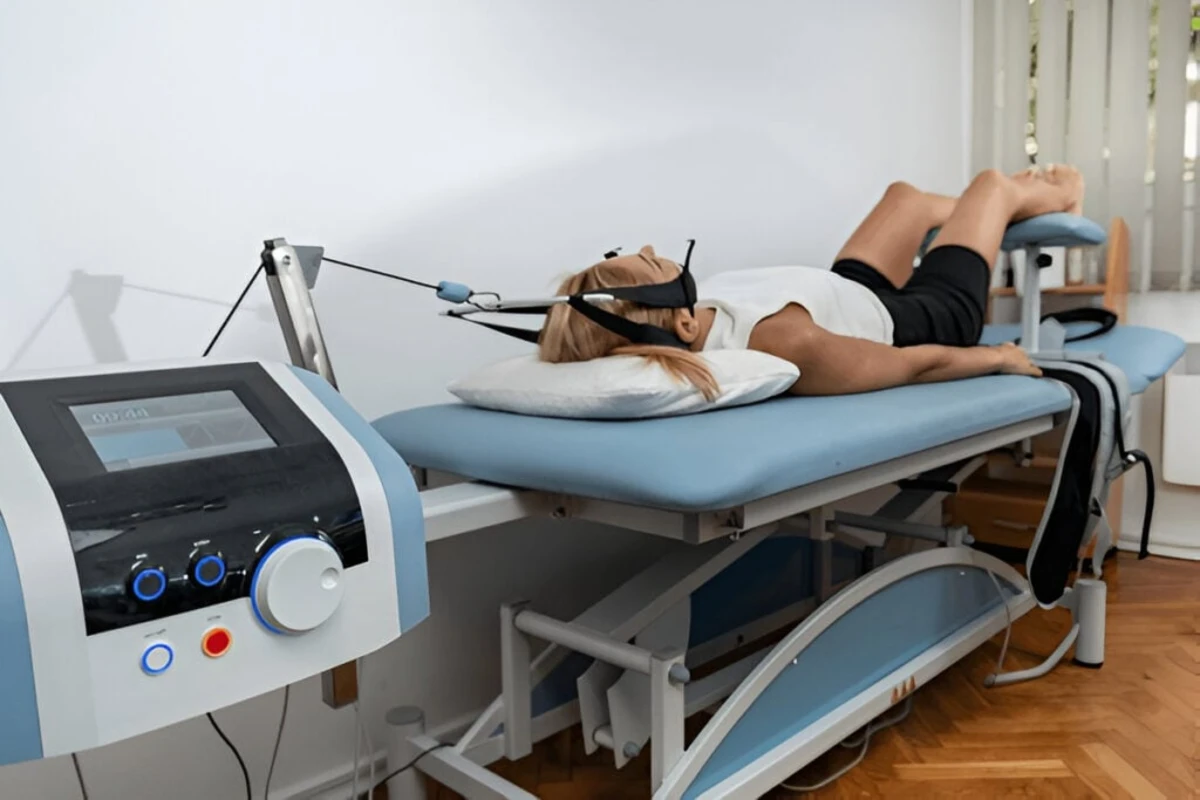
Does cryotherapy help migraines?
Quick answer: Cryotherapy for migraines has modest, short-term evidence. A 2023 meta-analysis found cold therapies such as gel caps, headbands and cold wraps reduced migraine pain 30 minutes after use, with no clear benefit at 24 hours and very low to moderate certainty. We found no published trials of whole body cryotherapy for migraine.
Cold is one of the oldest home remedies for head pain. The authors of a 2013 neck-cooling trial called it the most common self-care approach for migraine without aura, though why it helps is still unclear (Sprouse-Blum et al., 2013).
After more than 15,000 supervised sessions in our North York studio since 2013, our honest view is this: cold may take the edge off an attack for some people, it does not work for everyone, and it is no replacement for medical care. This article is general information, not medical advice. Frequent or severe headaches deserve a proper diagnosis from your family doctor or a neurologist.
How might cold therapy affect migraine and headache pain?
Several explanations have been proposed. None is proven for migraine, and more than one may be involved.
Slower nerve signals
In a study of 23 athletes, cooling ankle skin to 10°C cut nerve conduction velocity by about 33% and raised pain threshold and tolerance (Algafly and George, 2007). That was the ankle, not the head, so it shows a general effect of cold on pain signalling, not proof of a migraine benefit.
Narrowing of blood vessels
Cold constricts blood vessels near the skin (vasoconstriction), and one long-standing idea is that this calms throbbing pain. The migraine studies below report pain scores rather than measuring blood vessels, so this remains a theory.
The neck-cooling (carotid) hypothesis
The 2013 trial targeted the carotid arteries, which come close to the skin at the sides of the neck, proposing that a frozen wrap there might cool the blood flowing to vessels inside the skull (Sprouse-Blum et al., 2013). Pain scores fell, but the mechanism itself is still a proposal.
Comfort and distraction
A strong sensation can draw attention away from pain, and the authors of a 1986 clinic study suggested cold may also offer psychological relief (Diamond and Freitag, 1986). Cold does not suit everyone, though: in a 2006 pilot study, two of 28 participants stopped because of cold intolerance or vertigo (Ucler et al., 2006).
What does the research say about cold therapy for migraines?
A 2023 meta-analysis: short-term relief, low certainty
Hsu and colleagues pooled six studies (four randomised controlled trials) testing cold-gel headbands and caps, intraoral cooling, skin-temperature biofeedback and a cold wrap with massage. Compared with no cold, these reduced migraine pain 30 minutes after use. At 24 hours, effects on pain and nausea were marginal and not statistically clear, and the certainty of evidence ranged from very low to moderate (Hsu et al., 2023).
Targeted neck cooling: the 2013 randomised trial
In a randomised crossover trial completed by 55 people with migraine, a wrap holding two frozen ice packs was placed over the carotid arteries at migraine onset. At 30 minutes, pain had fallen by about 32% in the cold-wrap arm but risen by about 32% in the control arm (Sprouse-Blum et al., 2013).
Gel cap pilot study (2006)
Twenty-eight people with migraine were given a cold gel cap to wear for 25 minutes during two attacks. Average pain scores fell from about 7.9 to 5.5 on a visual analogue scale 25 minutes after the first, with a similar drop for the second, but with no control group some improvement may have happened anyway (Ucler et al., 2006).
Cold alongside medication (1986)
At a Chicago headache clinic, 90 patients with migraine, cluster or mixed headaches added a frozen gel pack to their usual medication; 71% rated the pack effective and 52% reported an immediate decrease in pain (Diamond and Freitag, 1986). Cold was used with medication, not instead of it.
Cold plus relaxation training (2025)
In a randomised trial of 26 adults with migraine without aura, adding cold to four weeks of progressive muscle relaxation led to a larger drop in monthly attacks than relaxation alone, but no difference in pain intensity, disability or quality of life (Kisa et al., 2025).
Cryotherapy for headaches: tension-type headache (2018)
A 2018 randomised trial in 53 people with tension-type headache compared a standard ice pack with a milder cold device over four weeks. Cold intolerance, device use and painkiller intake differed between groups, and the authors concluded that tolerable cold may work better than the coldest possible (Meng et al., 2018).
Bottom line: cold may ease migraine pain briefly for some people, longer-term evidence is thin, and none of these trials used cryotherapy cabins or cold-air devices.
Which studies support cold therapy for migraines? (evidence table)
| Study | Headache type and size | Cold method | Main finding | Key limitation |
|---|---|---|---|---|
| Hsu et al., 2023 (meta-analysis) | Migraine; 6 studies | Gel headband, gel cap, intraoral cooling, cold wrap and others | Less pain at 30 minutes; no clear effect at 24 hours | Very low to moderate certainty |
| Sprouse-Blum et al., 2013 (crossover RCT) | Migraine; 55 completed | Frozen neck wrap over the carotid arteries at onset | About 32% less pain at 30 minutes vs a rise in the control arm | Single, small trial |
| Ucler et al., 2006 (open-label pilot) | Migraine; 28 enrolled, 26 analysed | Cold gel cap, 25 minutes | Pain score fell from about 7.9 to 5.5 | No control group; 2 stopped due to side effects |
| Diamond and Freitag, 1986 (clinic study) | Migraine, cluster and mixed; 90 patients | Frozen gel pack plus usual medication | 71% rated the pack effective | Older study; no sham control |
| Kisa et al., 2025 (RCT) | Migraine without aura; 26 | Cold plus muscle relaxation, 4 weeks | Fewer monthly attacks than relaxation alone | Very small; no difference in pain intensity |
| Meng et al., 2018 (RCT) | Tension-type headache; 53 | Milder cold device vs ice pack, 4 weeks | Cold intolerance and painkiller use differed | No group without cold |
| Whole body cryotherapy | Migraine | Cryosauna, −110°C to −195°C | No published trials found | Evidence gap |
Ice packs vs localized vs whole body cryotherapy: which fits headaches?
| Method | Where the cold goes | Headache evidence | Practical role |
|---|---|---|---|
| Ice pack, gel cap or frozen neck wrap | Forehead, scalp or neck | The method used in most migraine studies | At home, during an attack |
| Localized cryotherapy (neck and shoulders) | Targeted cold air on one focused zone | Not studied specifically for migraine | Neck and shoulder discomfort, between attacks |
| Whole body cryotherapy | The body, in an open-top cryosauna at −110°C to −195°C for 2–3 minutes; the head stays above the cabin | No published migraine trials found | Not a headache treatment; careful screening essential |
Why an ice pack suits an attack better
Most of the research on ice for migraine applied cold during an attack, in one trial right at onset. No trip across Toronto can match that, and you should not drive if your vision is affected.
Where localized cryotherapy may fit
Localized cryotherapy directs cold air at one area, including the neck and shoulders. If your headaches tend to come with a stiff neck and tight shoulders, a session there is worth discussing between attacks, alongside your doctor's advice. It has not been tested for migraine, so we see it as a comfort option, not a fix. Our localized cryotherapy guide explains more.
Whole body cryotherapy and migraine
During whole body cryotherapy your head stays above the cryosauna, so it is not cooled directly. With no published migraine trials, we do not recommend it for headaches.
How do you use ice for a migraine or headache at home?
If your doctor agrees, these steps follow how cold was used in the studies, plus common-sense safety.
- Start early. The neck-wrap trial applied cold at onset, so keep a gel pack or wrap in the freezer.
- Pick a spot. Try the forehead and temples, the back of the head, or a wrap over the sides of the neck, as in the 2013 trial.
- Use a barrier. Wrap packs in a thin cloth and never put a frozen pack on bare skin.
- Keep it moderate. The gel-cap study used 25 minutes. Stop sooner if your skin turns numb, very red or painful, and let it rewarm before reapplying.
- Comfortable, not extreme. The tension-type trial suggests tolerable cold may beat the coldest pack.
- Keep your usual plan. Do not stop or delay prescribed medicine to try cold instead.
- Track the results in a headache diary and share them with your doctor.
Who should not use cryotherapy for headaches?
Studio cryotherapy is not for everyone. At your free consultation we review your health history, and conditions that rule it out include:
- uncontrolled high blood pressure;
- a history of stroke, or a seizure disorder;
- a recent heart attack, heart failure, unstable angina, a pacemaker or recent heart surgery;
- Raynaud's, cold urticaria, cryoglobulinemia or cold-induced asthma;
- circulatory or clotting disorders;
- pregnancy;
- a fever or acute respiratory illness;
- being under 18 without parental consent and medical clearance.
See the full list on our contraindications page and read our cryotherapy side effects and safety guide.
A rare safety report
A 2026 case report described a teenager who developed reversible cerebral vasoconstriction syndrome, a temporary narrowing of arteries in the brain, after a whole body cryotherapy session (Dantas et al., 2026). One case cannot prove cause, and the authors note there is limited to no evidence linking the two, but it underlines why we screen carefully and why a sudden severe headache after any cold exposure needs urgent care.
When does a headache need urgent medical care?
Most headaches are primary headaches, such as migraine or tension-type headache, but a minority have another underlying cause. Neurologists use red-flag checklists such as SNNOOP10 to help spot them (Do et al., 2019).
Call 911 or go to the nearest emergency department for:
- a sudden, severe headache with an abrupt onset (sometimes called a thunderclap headache);
- a headache with weakness, numbness, confusion, trouble speaking, vision loss or reduced consciousness;
- a headache with fever or other signs of serious illness;
- a headache that began after a head injury.
See a doctor promptly if:
- you have a new type of headache, or your usual pattern has changed or keeps getting worse;
- headaches start after age 65;
- they change with posture or are brought on by coughing, sneezing or exercise;
- you are pregnant or recently gave birth;
- you have a history of cancer or a weakened immune system;
- you have a painful eye along with the headache;
- you take painkillers very often, or the headaches began with a new medication.
Unsure how urgent it is? Health811 (dial 811) offers free advice from a registered nurse anywhere in Ontario. None of these situations is a reason to book cryotherapy: get checked first.
Can a Toronto cryotherapy studio help with headaches?
To be straightforward: we do not treat migraine, and cryotherapy does not replace a diagnosis or your doctor's care. What our North York studio, on Dufferin Street just south of Finch Avenue West, offers is a supervised way to use cold on the neck and shoulders if your doctor agrees.
Your first visit
- Free one-on-one consultation. Plan about 30 minutes. We review your health history, goals and contraindications, then build a personalised plan.
- A focused session. Localized cryotherapy targets one zone per session, with no downtime; nearby related areas are often included, and separate regions may cost extra. If shoulder pain is part of the picture, see cryotherapy for shoulder pain.
How often, and what it costs
Some people feel relief after one session; for chronic issues, most see the best results with 2–3 sessions per week, and your technician will recommend a schedule. There is no research-based schedule for headaches, so start conservatively and track your headaches. Our guide to how often you should do cryotherapy explains more.
Localized sessions are $35 for an intro session, $45 for a single session, or 5 for $200, 10 for $380 and 15 for $525 (CAD, plus 13% HST). Packages never expire. See pricing, contact us or call (416) 509-4555 to book.
Frequently asked questions
Is ice or heat better for a migraine?
Can whole body cryotherapy stop migraines?
Where should I put ice for a migraine?
How long should you ice your head for a headache?
Can cold make a headache worse?
Do you offer cryotherapy for headaches in Toronto?
Sources & further reading
- Hsu YY, Chen CJ, Wu SH, Chen KH. Cold intervention for relieving migraine symptoms: a systematic review and meta-analysis. J Clin Nurs. 2023;32(11-12):2455-2465. pubmed.ncbi.nlm.nih.gov/35596276/
- Sprouse-Blum AS, Gabriel AK, Brown JP, Yee MH. Randomized controlled trial: targeted neck cooling in the treatment of the migraine patient. Hawaii J Med Public Health. 2013;72(7):237-241. pubmed.ncbi.nlm.nih.gov/23901394/
- Ucler S, Coskun O, Inan LE, Kanatli Y. Cold therapy in migraine patients: open-label, non-controlled, pilot study. Evid Based Complement Alternat Med. 2006;3(4):489-493. pubmed.ncbi.nlm.nih.gov/17173113/
- Diamond S, Freitag FG. Cold as an adjunctive therapy for headache. Postgrad Med. 1986;79(1):305-309. pubmed.ncbi.nlm.nih.gov/3941818/
- Kisa EP, Kara Kaya B, Yalman M, Akin AE. Effectiveness of cold application combined with progressive muscle relaxation in migraine without aura: a randomized controlled trial. Medicine (Baltimore). 2025;104(40):e44760. pubmed.ncbi.nlm.nih.gov/41054165/
- Meng WJ, Jo SY, Lee SH, Kim NH. Modification of therapeutic temperature range in cryotherapy could improve clinical efficacy in tension type headache. J Back Musculoskelet Rehabil. 2018;31(3):577-581. pubmed.ncbi.nlm.nih.gov/29562486/
- Algafly AA, George KP. The effect of cryotherapy on nerve conduction velocity, pain threshold and pain tolerance. Br J Sports Med. 2007;41(6):365-369. pubmed.ncbi.nlm.nih.gov/17224445/
- Do TP, Remmers A, Schytz HW, Schankin C, Nelson SE, Obermann M, et al. Red and orange flags for secondary headaches in clinical practice: SNNOOP10 list. Neurology. 2019;92(3):134-144. pubmed.ncbi.nlm.nih.gov/30587518/
- Dantas M, Zilinskas K, Shen C, Summer A. Reversible cerebral vasoconstriction syndrome triggered by whole-body cryotherapy in a teenager. J Child Neurol. 2026;41(8):1193-1196. pubmed.ncbi.nlm.nih.gov/41452070/
Try cryotherapy in Toronto
New clients start with a $40 first visit including a free one-on-one consultation. 4646 Dufferin St, North York · Since 2013 · 15,000+ sessions · 5.0★ from 135+ Google reviews.