Cryotherapy for Muscle Recovery & DOMS: Does It Work?
Key Takeaway
Cryotherapy for muscle recovery and DOMS has a sound mechanism and a consistent subjective benefit — most active people feel less sore and fresher after a session, especially within 24 hours of hard training. The formal research is mixed (a Cochrane review found insufficient high-quality evidence), so we present it honestly: a genuinely useful, tolerable recovery tool, not a proven miracle.
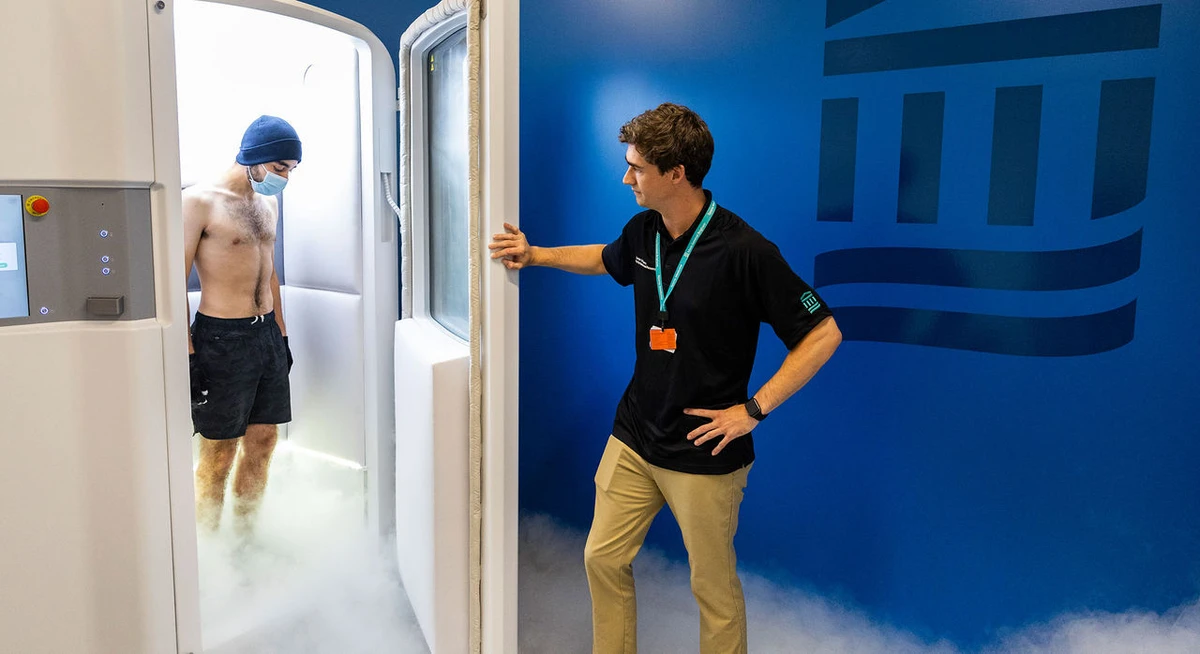
If you train hard, you know the feeling: the deep, aching soreness that shows up a day or two after an unfamiliar or intense workout. That is delayed onset muscle soreness, or DOMS — and cryotherapy is one of the most popular tools people reach for to manage it. But does whole body cryotherapy actually speed muscle recovery and reduce DOMS, or is it just an expensive cold shock? Here is an honest, evidence-based answer.
What is DOMS, and why does it happen?
Delayed onset muscle soreness is the stiffness and pain that peaks roughly 24 to 72 hours after training — especially after eccentric movements (the lowering phase of a lift), new exercises, or a jump in intensity. It is driven largely by micro-damage to muscle fibres and the inflammatory repair response that follows. That inflammation is a normal, necessary part of getting stronger; the problem is that, left unmanaged, the soreness can wreck your next session and blunt your training consistency.
Does cryotherapy help muscle recovery?
Whole body cryotherapy exposes your body to dry, cold air as low as −195°C for two to three minutes. The cold triggers vasoconstriction, which reduces the inflammatory swelling in fatigued muscle; when you warm up afterward, a rush of oxygen- and nutrient-rich blood returns to the tissue. On top of that, the cold releases endorphins and norepinephrine that lower the perception of pain. In plain terms: many people genuinely feel less sore and fresher after a session — often within a few hours.
What does the evidence actually say?
This is where we stay honest. Plenty of studies report reduced perceived muscle soreness and lower markers of muscle damage (like creatine kinase) after cryotherapy. But a well-known Cochrane review of whole body cryotherapy for preventing and treating muscle soreness concluded there was insufficient high-quality evidence to draw firm conclusions — mostly because the studies were small, used very different protocols, and rarely blinded. "Insufficient evidence" is not the same as "it does not work"; it means the research has not yet been done well enough to say for certain. Meanwhile, a great many professional teams and athletes use it because the subjective benefit is consistent enough to matter to them.
Our take, after more than 15,000 sessions since 2013: cryotherapy is a genuinely useful recovery tool for most active people, the mechanism is sound, and the majority of clients report feeling less sore and more recovered. We simply will not oversell it as a proven miracle — and that honesty is exactly why people trust the recommendation.
How does cold help with DOMS specifically?
For DOMS, timing matters more than anything. The soreness is driven by inflammation that builds over the first day or two, so the highest-value window is within 24 hours of your hardest training — a session the morning after leg day, a long run, or heavy sparring blunts the inflammatory cascade before the soreness fully sets in. If you are already sore (24–72 hours out), cryotherapy still helps by reducing pain perception and inflammation, shortening how long the DOMS lingers.
Whole body cryotherapy vs ice baths vs localized cold — which is best for recovery?
They work through similar cold-exposure mechanisms, but the practical differences matter. An ice bath means 10 to 20 minutes of genuine discomfort in cold water; whole body cryotherapy is a dry, tolerable two to three minutes, which is why most people actually stick with it — and consistency beats any marginal difference in mechanism. For one specific problem area — a sore knee, a tight hamstring — localized cryotherapy concentrates the cold on that spot and penetrates deeper than an ice pack. Many athletes combine whole body cryotherapy for overall recovery with localized cryo on their worst area.
One nuance worth knowing: because inflammation plays a role in training adaptation, some researchers suggest heavy cold exposure immediately after resistance training might slightly blunt long-term muscle growth. If pure hypertrophy is your single priority, leave a few hours between lifting and your session; for recovery, performance and getting back to training sooner, that trade-off rarely matters.
How should I use cryotherapy for muscle recovery?
Book a session within 24 hours of your hardest training to get ahead of DOMS. For recreational athletes training three or four times a week, one or two sessions a week works well; in a heavy training block or competition season, three to five is common and safe. Pair it with the basics that actually drive recovery — sleep, protein and sensible load management — and cryotherapy becomes a reliable way to train more often with less accumulated soreness. Because our packages never expire, you can load up during your season and pause in the off-season.
The honest bottom line
Does cryotherapy work for muscle recovery and DOMS? The mechanism is real, the subjective benefit is consistent, and it is one of the most practical, tolerable recovery tools available — even though the formal research has not fully caught up to the practice. It is not magic, and we will not pretend it is. But for most people who train hard, it is well worth trying — which is exactly what the $40 first session is for.
Try It and Judge for Yourself
$40 first session including a consultation. 4646 Dufferin St, North York. Since 2013 • 15,000+ sessions • 135+ five-star reviews.